Jobbi: The Startup Born From a Payment Problem No One Was Talking About
tl;dr
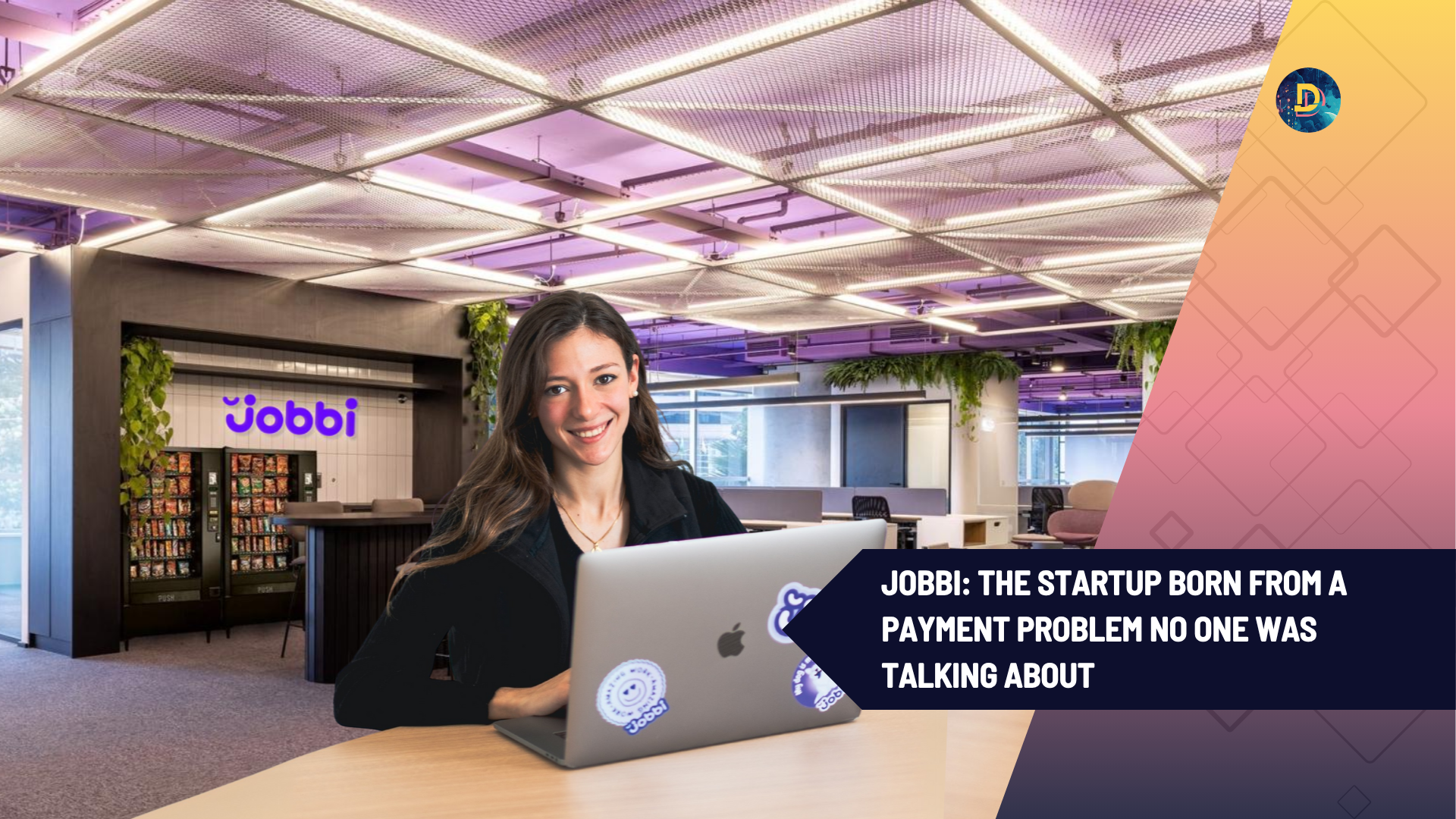
Jobbi was born from founder Gaby’s personal experience struggling to get paid while working remotely from El Salvador.
That early frustration revealed a deeper structural problem in how global work systems treat talent outside traditional economic centers.
Today, Jobbi is building AI technology to make hiring more efficient, modern, and borderless, connecting global talent and opportunity beyond geography.
Gaby was doing everything right. She had the international job, she was hitting her numbers, and she was proving that talent doesn't have a zip code. But every month, the same wall appeared: she couldn't get her paycheck.
It wasn't a performance issue or a lack of trust from her bosses. It was simply because she was logging in from El Salvador.
"The system just wasn't designed for people like me," Gaby recalls. It’s a specialized kind of exhaustion, the realization that you can deliver world-class value and still be sidelined by a technicality. It felt like an invisible ceiling made of bank codes and regional restrictions. Eventually, the frustration shifted from “Why is this happening to me?” to “Why is the infrastructure this broken?”
That shift was the birth of Jobbi.
What began as the desire to fix a broken payment system has since evolved into something much bigger. While the payroll challenge first exposed the problem, Jobbi today is building AI-native technology that helps companies identify, evaluate, and connect with talent more efficiently, across borders, time zones, and contexts. The company’s vision goes beyond payroll; it’s about removing friction from the systems that decide how talent and opportunity find each other in a global workforce.
Building in the "Wrong" Place
When Gaby decided to build a global work and hiring platform, she didn't move to Silicon Valley. She stayed in El Salvador. In the tech world, that’s often seen as a handicap, but Gaby saw it as a filter for truth.
"Many people don’t expect a global technology product to come out of El Salvador," she says. There’s a subtle skepticism in early meetings, an unspoken question of whether a 24-year-old in Central America can solve a problem for the whole world. But that "disadvantage" became Jobbi’s secret weapon. Because they were building from outside the traditional power centers, they couldn't afford to build a "local" solution. They had to be borderless by design from day one.
In regions like Central America, you learn to do a lot with very little. It breeds a specific type of grit, a "grounded" innovation that prioritizes practical, scalable results over venture capital hype.
The Myth of Being "Ready"
At 24, Gaby is often asked where she found the confidence to take on global banking systems. Her answer is refreshing: she didn't have it.
"I didn’t have all the answers," she admits. "I just learned fast, made mistakes, changed direction, and learned an incredible amount along the way." Her confidence wasn't a prerequisite; it was a byproduct of survival. Each challenge solved, from building product pipelines to understanding how AI could streamline hiring, made the mission clearer.
She's also quick to push back on the "solo founder" myth. While the dream started with her own frustration, the execution belongs to her team. "I could dream on my own," Gaby says, "but pushing ourselves to these limits? That only happens because of the people around me."
A New Narrative for the Region
For Gaby, success isn't just a high valuation for Jobbi. It’s about changing the "When and Who" of Central American startups.
The conversation is finally moving away from “Can a global company come from El Salvador?” to “Who is going to do it next?” Remote work has leveled the playing field, but there’s still a massive gap in how the world perceives talent in "overlooked" regions.
What the global ecosystem often misses, she believes, is perspective. Founders here learn to build with limited resources, focus on real problems, and create practical solutions that scale. That mindset, doing more with less, is exactly what the next wave of global startups will need.
Gaby’s advice to emerging founders is grounded in that reality: “Don’t wait until you feel completely ready.” If she had waited until she felt like an expert, Jobbi wouldn’t exist. She started because she was tired of a system that didn’t see her. Now, she’s building one that sees everyone.
Looking Ahead
When Gaby thinks about success five years from now, she doesn’t just picture Jobbi. She sees a movement.
She imagines more founders from El Salvador and across Central America launching global products, not because someone gave them permission, but because they built with conviction. Because one of the biggest barriers isn’t access to capital or technology; it’s belief.
What began as frustration with broken infrastructure has grown into a broader mission: creating better pathways between talent and opportunity, regardless of geography.
“It is possible to build something big from places that historically haven’t been at the center of the conversation. It is possible to create a global impact from El Salvador. And it is possible to do it while staying true to your story and to what drives you.”
Jobbi started with frustration. Today, it’s an AI-native platform that helps teams go from prompt to hire, searching 800 million professional profiles, ranking candidates, and automating the journey from discovery to payment in one seamless workflow.
For Gaby, that’s the ultimate goal: proving that world-changing companies can start anywhere, even in places the world least expects.