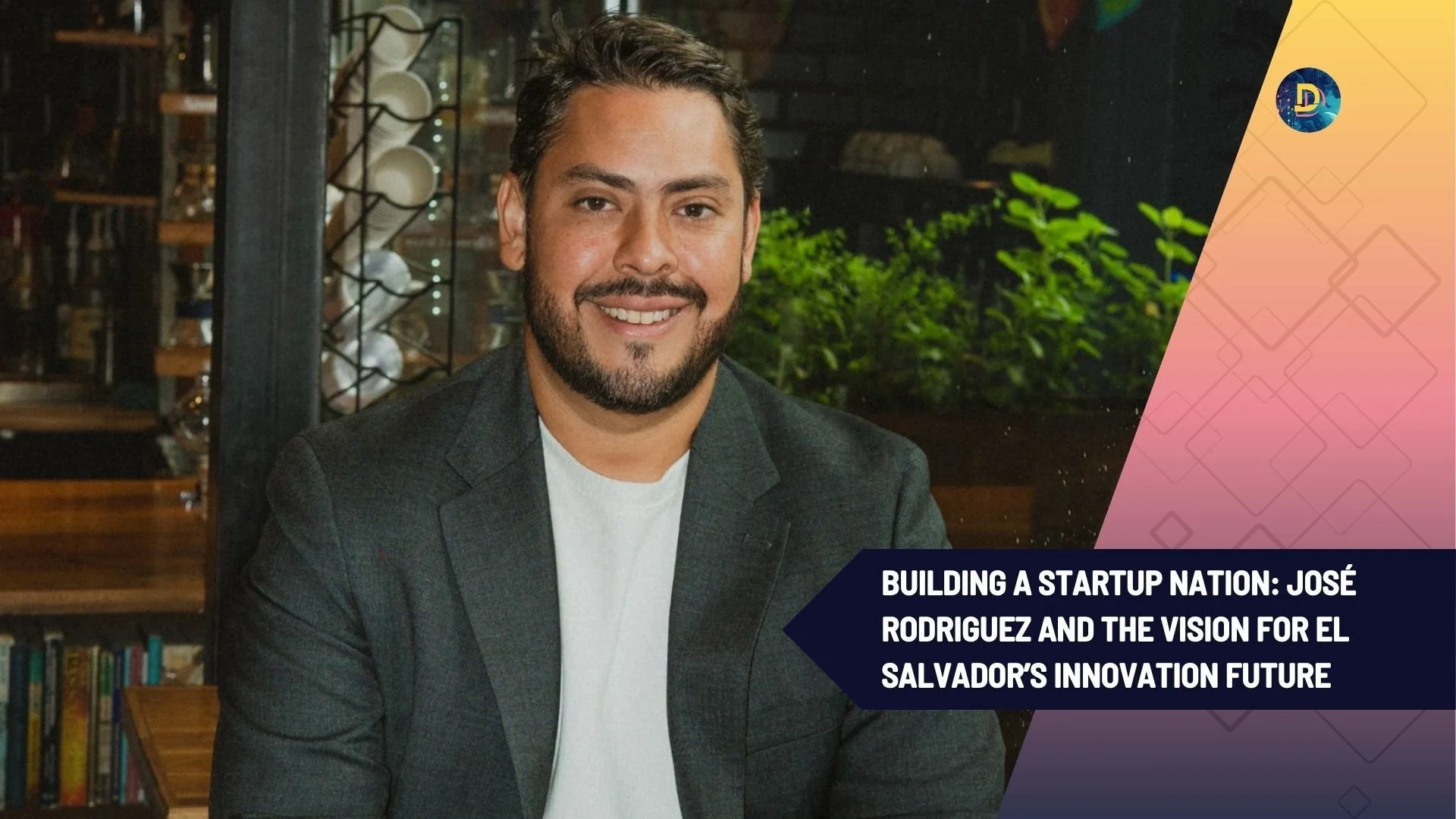
Building a Startup Nation: José Rodriguez and the Vision for El Salvador’s Innovation Future
tl;dr
José Rodriguez spent a decade building El Salvador’s startup ecosystem from the ground up through Impact Hub, helping founders understand innovation, incubation, and venture building.
Now as CEO of CoreNest El Salvador, he is leading a $25M accelerator fund designed to attract startups from across Latin America to build, test, and scale in the region.
His vision is ambitious: to position El Salvador as a proving ground for global innovators and a launchpad for the next generation of Latin American startups.
Ten years ago, the startup ecosystem in El Salvador was a blank canvas. “There was nothing,” José Rodriguez recalls, reflecting on the early days. “We had to start by helping people understand what innovation meant.”
As a managing partner of Impact Hub San Salvador, José dedicated himself to this mission, fostering a culture of entrepreneurship in a country still discovering its potential. Through pre-incubation and incubation programs, he guided aspiring founders, igniting a belief that Central America could transcend its regional limitations.
“Every small success felt monumental,” he shares. “When we took startups abroad, and they raised funds, it was a turning point.”
Today, as CEO of CoreNest Accelerator El Salvador, José is leading a $25 million accelerator fund aimed at transforming the region into a launchpad for global innovators. “Now we finally have a vehicle to accelerate it,” he asserts, with excitement.
Starting before the ecosystem existed
José’s work began long before venture capital funds or startup accelerators were part of everyday conversations in the country.
Through Impact Hub, he helped launch programs across Central America with support from the Inter-American Development Bank and Impact Hub Global. The goal was simple but ambitious: create innovation spaces and startup support systems in countries like Nicaragua, Honduras, and El Salvador.
“At that time, we were helping the ecosystem learn,” he explains. “Pre-incubation programs, incubation programs, helping founders understand how to build companies.”
The work was slow, but over time the community began to grow.
José also began connecting local founders to international opportunities. Over the past two years, he organized startup missions that brought promising Salvadoran founders to cities like New York, Lisbon, and Brazil.
Those trips helped unlock capital and global visibility for companies that might otherwise have stayed local.
“We took 18 startups abroad,” he says. “Through those missions, we helped them raise about $25 million dollars.”
More importantly, the trips helped change how the country viewed startups.
“The word startup started becoming important for the country,” José explains.
A National Transformation
El Salvador is undergoing a profound shift. It is now striving to become the Silicon Valley of Latin America. “The political will is there,” José notes. “People are working very hard to make it happen.”
His passion is palpable as he describes the momentum building around innovation. “Building things in El Salvador right now is exciting,” he says, eyes shining with hope for the future.
Enter CoreNest
The attention of CoreNest, a venture fund looking to expand its global footprint, marked a pivotal moment. “They saw potential here,” José explains. “Now I’m managing the accelerator and the fund.”
The program offers more than just capital; it creates pathways for founders to establish their businesses, connect with corporate partners, and expand into regional markets. “We’re not just giving capital,” he emphasizes. “We’re building an ecosystem.”
CoreNest – Origin & Vision
CoreNest was born from a broader vision to position El Salvador as a global hub for innovation and entrepreneurship. After years of working on ecosystem development through initiatives like Impact Hub, it became clear that the region didn’t lack talent—but rather access to capital, global networks, and scalable platforms.
CoreNest expansion originated as a response to that gap: a fully integrated platform combining venture capital, acceleration, and ecosystem building, designed to attract high-potential startups from across Latin America and connect them with global opportunities.
CoreNest is backed by a combination of international investors, local strategic partners, and strong alignment with public institutions in El Salvador. This public-private collaboration is a key pillar of the initiative, enabling not only access to funding but also soft-landing infrastructure, regulatory support, and market entry advantages for startups.
At its core, CoreNest is not just an accelerator or a fund; it is a long-term platform to build a new generation of globally scalable companies from Latin America, using El Salvador as the launchpad.
The Founders Behind CoreNest
CoreNest is led by a founding team with deep experience across entrepreneurship, technology, and venture capital, bringing together both operational execution and global investment perspective.
The platform is co-founded by Bob Ras and Reza Bashash, two entrepreneurs with decades of experience building and scaling companies across multiple industries.
Bob Ras brings over 18 years of experience as a builder and operator. He has founded and scaled companies from early-stage to over $20 million in revenue, successfully exited ventures, and built strong capabilities in product development, manufacturing, and venture investment. His journey spans from Web2 entrepreneurship to Web3 and venture capital, where he now focuses on identifying and backing high-potential startups.
Reza Bashash complements this with a highly technical background and over 20 years of experience in startups and emerging technologies. He has built platforms in artificial intelligence, blockchain infrastructure, and decentralized ecosystems, leading technical teams and launching products across AI, fintech, and Web3. His expertise brings a deep understanding of how next-generation technologies are built and scaled.
Together, they combine operator experience, technical depth, and investment vision—creating a foundation that goes beyond traditional venture capital.
Execution & Global Expansion
While CoreNest is founded by a globally experienced leadership team, its execution is driven by operators on the ground and across key markets.
In El Salvador, José Roberto Rodríguez leads the accelerator as CEO, bringing over a decade of experience building startup ecosystems across Central America through Impact Hub and venture-building initiatives. He works closely with founders, partners, and government stakeholders to translate CoreNest’s global vision into real execution in the region.
He is joined by Pedro Crespo, Partner and Head of Global Expansion, who focuses on building strategic partnerships and supporting startups as they scale across markets, and Eric Damier, Marketing Venture Partner, who leads global storytelling and distribution, helping position both startups and the platform internationally.
Together, this team ensures that CoreNest is not only investing in startups, but actively helping them grow through partnerships, market access, and global visibility.
The Promise of El Salvador
José believes El Salvador’s size is its greatest asset. “It’s the perfect place to test solutions,” he asserts. “If you want people to try your product before going global, this is it.”
As he looks ahead, his vision is clear: “We want innovators from all over the world to come here. El Salvador can be a magnet for those who want to build and test.”
A different investment thesis
The CoreNest accelerator also reflects a shift in how early-stage startups are being built in the age of AI.
José says technology itself is no longer the hardest part of building a company.
“Now you can build a platform in weeks,” he explains. “The real value is not the technology anymore.”
Instead, success increasingly depends on networks, partnerships, and market access.
“The real value is how quickly you can move forward,” he says. “Who are your partners? Who helps you enter markets?”
That philosophy shapes how CoreNest operates.
Rather than simply writing checks, the accelerator focuses heavily on connections: corporate partnerships, investor introductions, and global networks that can help founders grow faster.
Building a regional ecosystem
José sees the accelerator as only the beginning.
The $25M fund is designed as a pilot to attract founders to the region and demonstrate what is possible.
“Our objective is bigger,” he says. “This is just the pilot.”
If successful, the long-term vision includes launching a $100 million fund and building a pipeline of more than 150 startups operating across Latin America.
The goal is to turn El Salvador into a magnet for entrepreneurs from across the region, and eventually the world.
“We want innovators from Germany, from Canada, from the U.S., from Spain,” José says. “People who want to build something and test it here.”
The People Behind the Startups
For José, the heart of this movement lies in the founders. “I try to understand their DNA,” he shares, recognizing the unique stories and motivations behind each entrepreneur. He is particularly inspired by emerging female founders, whom he believes are vital to the region’s growth.
“Their preparation and global vision are remarkable,” he says. “They’re ready to make waves.”
A region just getting started
José knows the work ahead will not be easy.
Building an ecosystem requires capital, mentors, corporate partners, and founders willing to take risks.
“We need expertise,” he says. “We need a global mindset. We need people who believe in what we’re building.”
But after ten years helping shape the early stages of El Salvador’s innovation community, he believes the moment has finally arrived.
“We’re creating something that has never existed here before,” he says.
And for José, that is exactly what makes the challenge worth taking.
José’s journey is a testament to the power of vision, resilience, and community. As he looks to the future, he remains committed to building something unprecedented. “Ten years ago, this conversation wouldn’t have been possible,” he reflects. “Now, we have the chance to build something big.”