tl;dr
We’re unpacking how leaders can govern and collaborate with AI confidently, using intelligence from Athena Alliance’s Salon with Shaara Roman (hosted by Coco Brown).
Athena’s members-only Salons offer raw, unfiltered expertise behind closed doors. We translate those conversations into a modern leadership framework that equips real teams to navigate AI in 2025.
Leaders are waking up to a new reality: the teams they manage are no longer just human. AI tools, algorithms, and intelligent systems now sit at the table, influence decisions, and shape outcomes in real time.
Shaara Roman puts it in plain language: “When AI joins the team, leadership shifts. Your job isn’t to have answers, it’s to facilitate the system. The winners aren’t the ones who know the most; they’re the ones who can integrate human judgment with machine intelligence in real time. They guide the orchestra.”
The question is no longer, “How will my team use AI?”
It’s: “How do I lead humans alongside intelligence that doesn’t sleep, complain, or need approval?”
New Leadership Behaviours for AI-Integrated Teams
To thrive in intelligent workplaces, leaders need four distinct skills:
1. Orchestration over command
The leader’s role is no longer to be the single source of truth. It’s to coordinate humans and AI to achieve outcomes efficiently. That includes deciding when to trust AI outputs, when to human-check them, and how to sequence actions.
2. Clarity and context
AI can provide insights at lightning speed, but without context, those insights are meaningless or even harmful. Leaders must ensure AI outputs are interpretable and actionable for the team.
3. Empathy for humans (and machines)
Teams can experience anxiety, fear, or resistance when AI is introduced. Leaders must address human concerns and manage expectations while also understanding the limits and quirks of the systems themselves.
4. Skill-bridging
AI doesn’t replace humans; it shifts skill needs. Leaders must identify where humans add unique value and where AI can enhance decision-making, then train and reorient the workforce accordingly.
Culture Shift: From Fear to Adaptability
People don’t resist AI because it’s complex; they resist it because it threatens identity.
Shaara notes: “Culture is your biggest AI adoption risk. If people don’t believe they belong in the future, they won’t help you build it.”
Shaara also adds: AI exposes leadership gaps instantly. If your processes are unclear, your incentives misaligned or your culture fragile, AI will magnify it. The future belongs to leaders who strengthen the human systems around technology, not just deploy the technology.
Research reinforces this:
A 2024 McKinsey study shows:
70% of employees fear AI will reduce their role
83% say they will embrace AI if leadership communicates safety, purpose, and clarity
The gap is leadership, not technology.
In other words:
AI adoption fails when culture fails.
The Future of Augmented Leadership
AI is no longer a “tool.” It’s a teammate.
Leaders who cling to old hierarchies will slow innovation, frustrate employees, and become vulnerable to the very systems they deploy.
Shaara Roman leaves leaders with the core truth:
“The leaders who thrive won’t be the ones with all the answers. They’ll be the ones who bring the best of humans and machines together. Human insight plus machine intelligence is the new performance multiplier”
The mandate is clear:
Lead the hybrid team.
Or risk being outpaced by it.
Lead the Hybrid Team With Confidence
Athena equips modern leaders with the frameworks, expert insights, and peer intelligence needed to manage human–AI teams effectively. Through private Salons and curated learning, you’ll build the skills to orchestrate, communicate, and lead in an AI-integrated workplace.
Join Athena: https://learning.athenaalliance.com/sign-up
Related Content
Bronwyn Saglimbeni helps leaders reclaim the human voice in an AI-driven world, showing that technology can amplify our words, but only humans give them meaning.
The 2025 Women’s Venture Summit, hosted by the Stella Foundation, united founders and investors to accelerate women’s access to capital. With $200M raised to date, the event celebrated bold innovation and the women reshaping venture.
Flossie Hall, CEO of Stella Foundation, is on a mission to redefine what success looks like for women entrepreneurs. From military spouse to seven-figure founder, she’s proving that grit and access, not privilege, fuel real opportunity. Through Stella, Hall is breaking down silos, building networks, and giving women everywhere the audacity to build the futures they deserve.
Genevieve LeMarchal and Cecilia Castelo are reshaping investing by backing urgent, overlooked healthcare needs and welcoming more women into angel circles. Their work shows that when women lead with purpose and community, capital flows to real problems and everyone benefits.
Alicia Robb is reshaping the future of investing by putting purpose and inclusion at the center of capital. Through initiatives like Rising Tide, Next Wave Impact, and the Kachuwa Impact Fund, she’s proving that when more women have access to investing, and when funds align with values like care and sustainability, finance can become a force for real, lasting change.
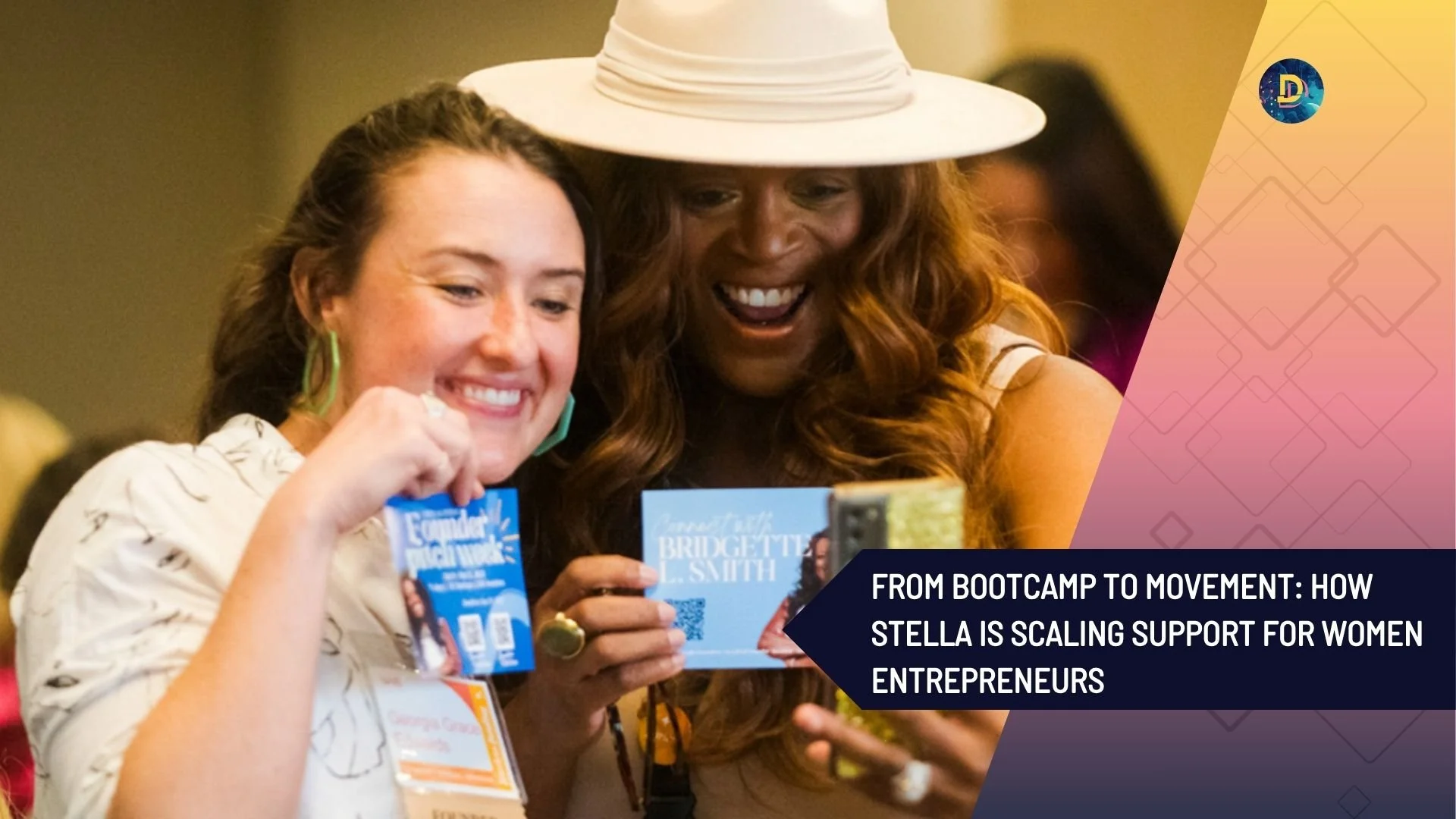
Stella started as a bootcamp to close the funding gap for women entrepreneurs and has grown into a national nonprofit providing free training, mentorship, and investor access. By leveling the playing field, it shows that when women thrive, communities thrive.
The friends and family round is often seen as the first step for startups, but it leaves too many founders behind. While privileged networks gain early backing, women and underrepresented entrepreneurs face barriers that stall their growth. CanWCC is pushing for a funding culture that values ideas over privilege, ensuring every founder has a fair shot at success.
Your voice is a strikepoint for your leadership. It's the moment where who you are and what you stand for meets the world.
Canada’s bold economic reset risks falling flat if it overlooks over half the population. While policymakers focus on trade and infrastructure, women-led businesses remain under-supported. CanWCC is stepping in to ensure women aren’t just rebuilding, but reimagining the economy on their terms.
Entrepreneurship’s messy setbacks test resilience, not plans, pushing women founders to adapt and grow. The Canadian Women’s Chamber of Commerce embraces this, pivoting like with their delayed Flip the Script launch to empower women with flexibility and purpose.
Traditional health plans sideline self-employed women, so the Canadian Women’s Chamber of Commerce is rolling out flexible, affordable benefits that keep women founders healthy and their businesses thriving.
The current system isn’t built for women entrepreneurs, so the Canadian Women’s Chamber of Commerce is helping adapt, innovate & leverage AI to accelerate real change.
Raise capital by building authentic relationships, strategic networking, and compelling storytelling. Keep investors engaged & turn them into long-term allies for growth.
The right co-founders, investors, and partners can make or break a business. Choose carefully, align values, and invest in strong relationships.
Learn how to engage investors in 2025 with proactive communication, tailored engagement, and digital strategies to foster confidence and growth.
From a PDF to a must-have app, Ali Ardakani and his team have revolutionized access to JP Morgan Healthcare Conference satellite events, empowering attendees with networking tools.
Owned media empowers brands to control their online presence, engage audiences, and drive earned media through strategic content creation.
Flip the Script empowers women-identified and non-binary entrepreneurs to tackle investor bias through AI-enabled simulations, building confidence and enhancing their pitch performance.
Email marketing enhances investor relations by fostering transparency, trust, and engagement, keeping your brand top-of-mind and strengthening customer connections.
Combining IR and PR strengthens messaging, aligns company values, and enhances trust, benefiting brand visibility and stakeholder engagement.
A strong investor presentation combines engaging design, a compelling narrative, and strategic clarity to build investor confidence.
Finding the right investor involves aligning values, industry knowledge, and active vs passive involvement for strategic growth alignment.
IR activity implementation against the plan is easier to measure & the IR plan provides a basis to adjust resources & tactics.