CI-RiskDB Is Betting Mining's Biggest Risk Is a Communication Problem
tl;dr
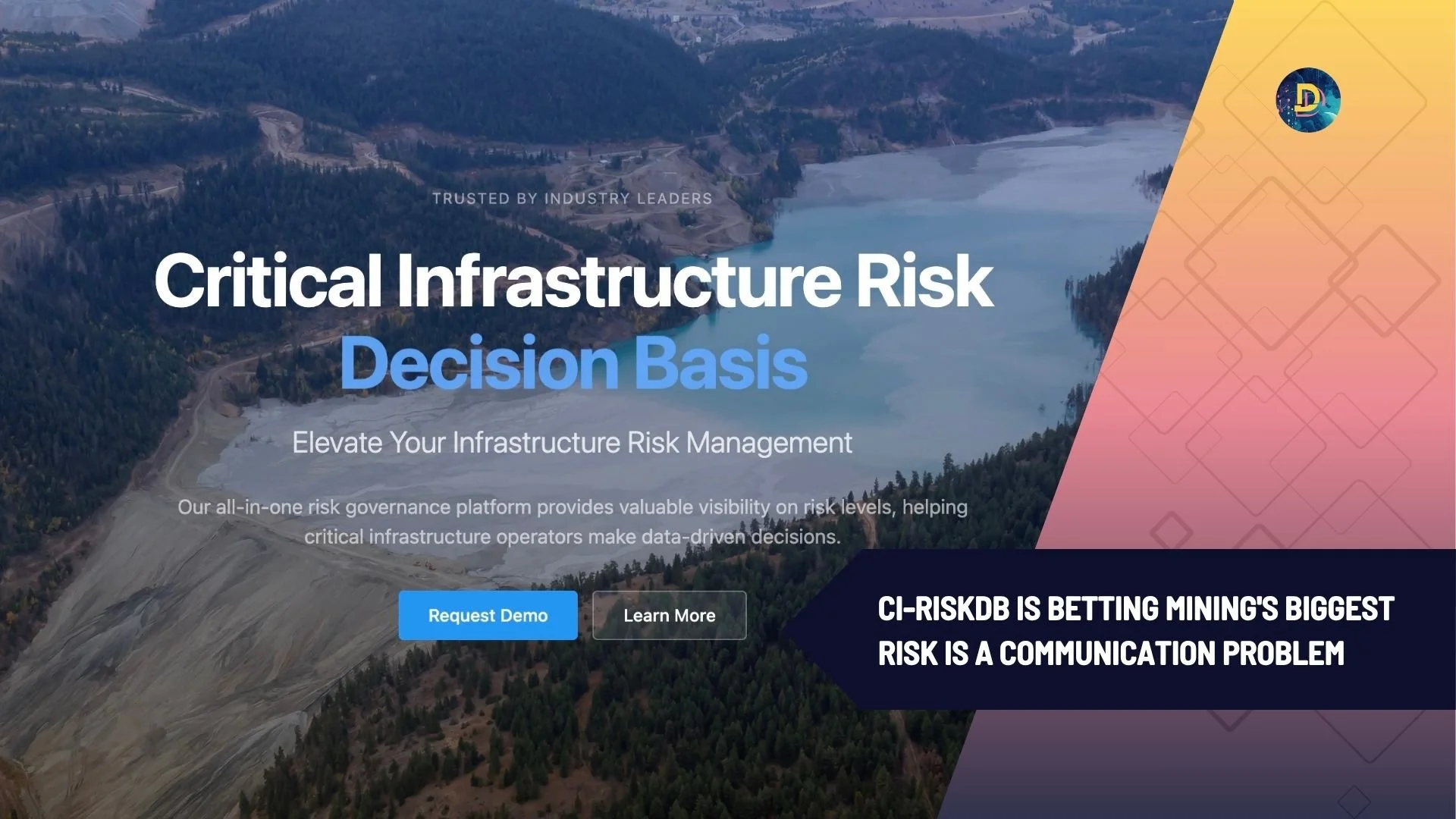
CI-RiskDB, led by Karen Chovan, wants to become the company mining organizations turn to for preventing catastrophic failures, not just producing auditable records.
A partnership that fell through right before a San Francisco trip pushed her thinking further than the deal itself ever would have.
Customer validation is stacking up quietly across engineering firms and insurance brokers, even as the sales cycle stays long.
Ask Karen Chovan what she wants people to remember about CI-RiskDB a year from now, and she doesn't reach for a tagline. She wants the company to be synonymous with prevention itself: the organization mining companies go to when they're serious about stopping failures before they happen, not just documenting them after the fact. Auditable records are a byproduct of what CI-RiskDB does. Preventing catastrophe is the actual mission.
Correcting the Record on Mining
Karen spends a fair amount of energy pushing back on assumptions about her own industry, including from people inside it. The common belief is that mining is slow to modernize and risk-averse by nature. She sees it differently: mining is fundamentally a risk-taking business, and the technology shift underway right now is enormous, just harder to see because so many changes are stacking on top of each other at once. Electrifying a fleet of vehicles, for instance, isn't a simple swap. It touches underground connectivity, automation, and equipment that costs billions to test properly. It looks slow because caution is warranted at that scale, not because the will to change is missing.
The Partnership That Wasn't
Not long before a trip to San Francisco, a would-be collaborator with shared intellectual property told Karen he was partnering with someone else instead. It stung, but it didn't stall her. If anything, it sharpened her thinking. Combined with fresh insights from the San Francisco trip, the moment pushed her past the idea of simply layering AI tools onto CI-RiskDB's existing process and toward something bigger: rethinking how the process itself could work. "It's just made me think a lot bigger," she says, "not just facilitating a process, but completely altering how you actually would do that process now."
Proof Nobody Asked Her to Manufacture
Validation for CI-RiskDB hasn't come from a single big win. It's come from a slow accumulation of the right people showing up. A partner has been building alongside the company since day one. A prospective client who'd been hesitant for over a year and a half finally signed on. Two engineering firms have expressed interest in trying the platform. And in conversations with insurance brokers, two separate sources, working independently, described the same underlying need CI-RiskDB was built to solve. None of it happened fast. All of it points the same direction.
What Surprised Her Most
Karen expected fundraising and investor relationships to be the hard part of building a company. What actually surprised her was learning she didn't have to go that route at all, that bootstrapping was still a legitimate way to build, even though every accelerator she encountered pushed the raising-capital playbook first. The second surprise was quieter: being told, by people she respected, that she could do this without a traditional tech background, despite an engineering career that had people calling her a "tech founder" anyway. She grew up in an entrepreneurial family and had juggled more than most founders before she ever filed incorporation paperwork. It still took outside voices telling her yes for her to fully believe it herself.
The Ambition She's Set Aside
There's a bigger vision Karen doesn't get to talk about as often as she'd like: circularity in mining, not just reprocessing materials, but genuinely repurposing land and building longer-term economic resilience into the regions mining touches. It's been on the side of her desk for years while she focused on risk management first. Watching the industry slowly move toward circularity now, while she's still tied up building the foundation, is a particular kind of frustration. The two goals are connected, she says, even if the timeline hasn't caught up yet.
Why We're Watching
CI-RiskDB is solving a problem that's easy to underestimate from the outside: not a lack of expertise in mining, but a failure to keep that expertise organized, shared, and acted on. Karen Chovan has spent 25 years inside that gap. Now she's building the company that closes it, one long sales cycle and one validated conversation at a time.