tl;dr
For years, Central America has been overlooked by much of the global venture capital ecosystem despite a growing pipeline of ambitious founders and scalable startups.
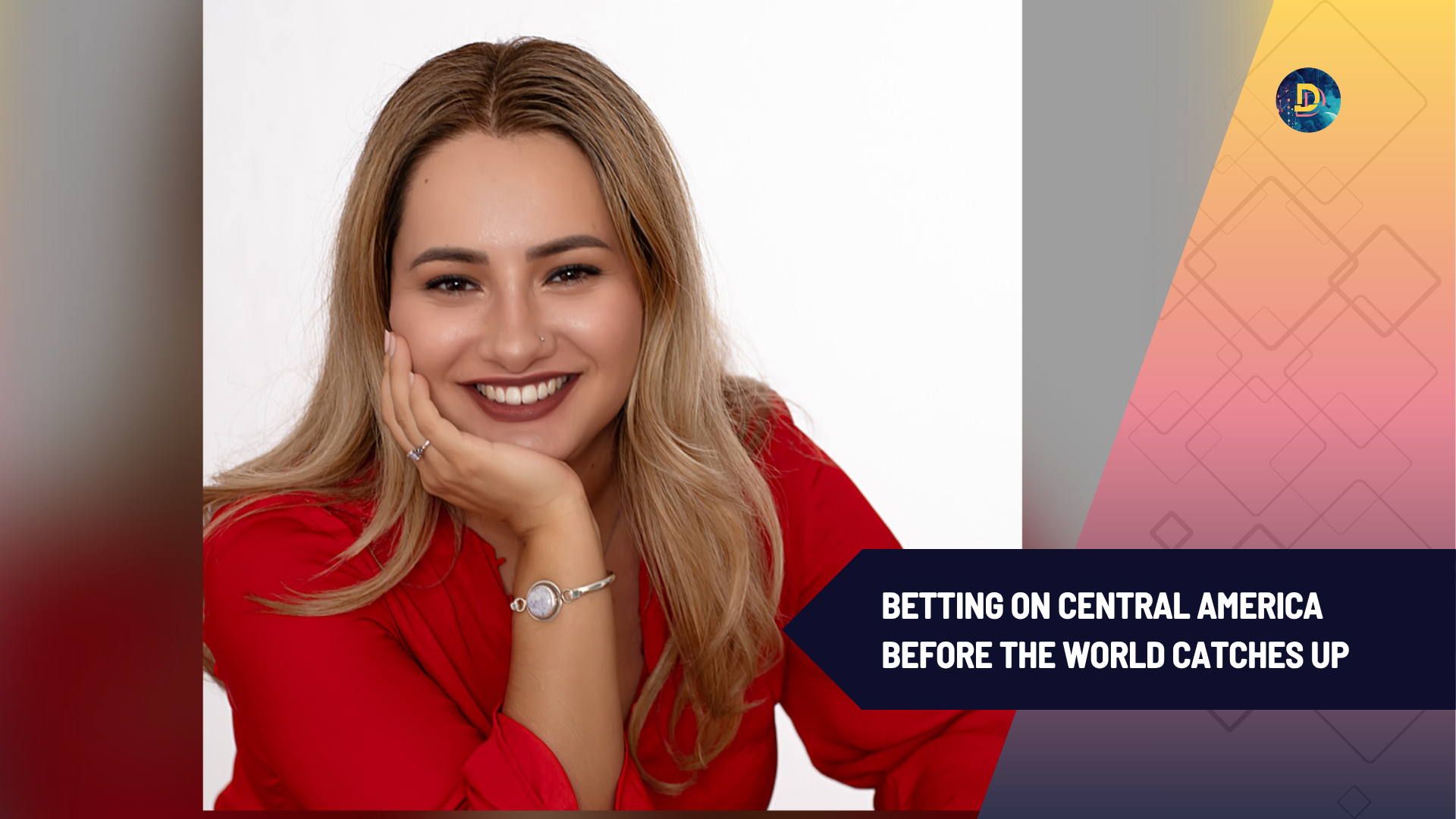
Abigail Napsuciale Heredia, Co-Founder and Head of Investments at Atta Impact Capital, believes the region's greatest strength lies in founders solving urgent real-world problems with resilience, efficiency, and deep local insight.
Today, Atta is backing impact-driven startups across Central America and Southern Mexico while helping build an ecosystem that is proving innovation can emerge far beyond traditional startup hubs.
For years, Central America has largely been left out of the global startup conversation.
Investors looked to Silicon Valley, New York, London, São Paulo, Mexico City, or Singapore, while much of Central America remained overlooked, underfunded, and underestimated. The narrative around the region often centered on instability, fragmentation, political risk, or talent leaving for larger markets.
But Abigail Napsuciale Heredia sees something different.
In our continued series on the opportunities south of the border, Abigail, Head of Investments and Co-Founder at Atta Impact Capital, is part of a growing wave of investors and ecosystem builders backing founders across Central America and Southern Mexico before the rest of the world fully catches on.
And unlike many investors chasing trends from a distance, her conviction was built on years spent inside the region.
“We’ve spent years building relationships, understanding the ecosystem, and learning directly from founders,” she shared during our conversation. “The opportunities are real, but you need patience and proximity to understand them properly.”
That patience became especially clear when Atta began raising support for its impact-first venture model.
Two investment partners have known the team for nearly five years, proving that relationships matter.
“The decision was actually very easy for them because the relationship already existed,” Abigail explained. “They had seen our work and results over time, they understood the region, and they trusted us and our vision. They wanted to be part of this new model we were creating.”
Another foundation partner came into the conversation from an entirely different starting point.
“They had many more questions,” she said. “For them, it was ground zero. We had to explain why us, why this region, what impact meant to us and for the ecosystem, in order to give this region the attention it deserves.”
That contrast reflects the broader reality of Central America’s startup ecosystem today.
For those already close to the region, the momentum is increasingly obvious.
For outsiders, the conversation often still begins with skepticism.
A Region Most Investors Still Don’t Understand
Abigail does not romanticize the challenges.
She openly acknowledges the myths, concerns, and perceived risks investors often associate with Central America:
Small market sizes.
Political instability.
Limited venture infrastructure.
Fragmented economies.
Lack of follow-on capital.
Concerns around governance.
Limited visibility internationally.
Fear that founders will relocate.
A perception that the region lacks globally scalable companies.
And yet, she believes many investors are missing the bigger picture.
“What people often fail to see is how resilient and resourceful founders here actually are,” she said. “These entrepreneurs are building in environments where they have to move faster, operate leaner, and solve very real problems from day one.”
That reality is creating companies deeply connected to operational challenges across logistics, commerce, financial inclusion, workforce access, sustainability, biodiversity, healthcare, and infrastructure.
The problems may look local at first but the solutions often have global relevance.
It mirrors themes already emerging across El Salvador’s evolving innovation ecosystem.
In our recent conversation with CoreNest CEO José Rodriguez, he described El Salvador as a potential “prototype nation” for innovation, a place where startups can validate solutions quickly before scaling globally.
And founders like Gaby from Jobbi are already proving that globally relevant companies can emerge from the region by solving overlooked market gaps.
For Abigail, this next phase of growth will be driven by proximity, trust, and long-term ecosystem building.
Why Atta Chose This Market
Atta Impact Capital focuses on early-stage, impact-driven companies across Central America and Southern Mexico.
The firm’s thesis is rooted in a belief that the region represents one of the most overlooked opportunities in venture and impact investing.
Part of that comes down to valuation.
While many global startup ecosystems have become increasingly expensive and competitive, Central America still offers the ability to back strong founders early while helping shape the ecosystem around them.
But Abigail believes the bigger advantage is proximity to urgent, unsolved problems.
“In more mature markets, many systems already work,” she explained. “Here, founders are building because the problems are impossible to ignore.”
That creates a different kind of founder.
One that is often closer to the customer, more operationally disciplined, and deeply motivated by impact alongside growth.
Beyond writing checks, Atta’s model also intentionally focuses on relationships, customizing technical support, and ecosystem strengthening by connecting founders with other sources of capital.
The goal is to help founders become investment-ready while building long-term regional credibility for the ecosystem itself.
That approach is also gaining recognition beyond the region. Earlier this year, Atta Impact Capital was selected for the 2025 T25 list by Collective Action for Just Finance, an annual recognition of 25 funds globally that are using innovative integrated capital approaches to help reshape the financial system. The recognition highlights Atta's efforts to combine financial returns with measurable impact while supporting founders in markets that have historically been overlooked by traditional venture capital.
And increasingly, that ecosystem is producing companies investors can no longer ignore.
Companies Building Across the Region
Atta Impact Capital’s growing portfolio reflects the diversity of innovation emerging across Central America and Southern Mexico.
Atta’s portfolio includes:
Vitrinnea, an El Salvador-based e-commerce platform transforming how people buy, sell, and connect in the pre-owned items market in Central America.Vitrinnea
Rutopía, a Mexico-based sustainable tourism platform connecting rural and indigenous communities with global travelers.Rutopía
Jobbi, the Salvadoran startup helping modernize hiring and workforce visibility across the region.
Kleantab, focused on eco-friendly cleaning tablets that eliminate single-use plastic waste.
Albedo, helping SMEs access affordable solar energy through a seamless, end-to-end financing platform.
Bioplaster, another impact-driven company turning invasive sargassum into biodegradable plastic alternatives
The sectors vary but the common thread is founders building practical, scalable solutions tied closely to real regional challenges.
A Different Kind of Ecosystem
Perhaps the most interesting part of the conversation was not about capital.
It was about belief.
Because for many years, Central America was not viewed as a place where globally relevant innovation could emerge.
Now, governments, investors, accelerators, corporations, and founders are beginning to align around a different possibility.
They are not trying to copy Silicon Valley but instead are building something distinct.
And while the ecosystem is still early, Abigail believes that may actually be one of its greatest advantages.
“There’s still an opportunity to shape the culture of innovation here,” she said. “To build ecosystems that are more collaborative, more impact-driven, and more connected to real societal needs.”
The world may still be underestimating Central America.
But conversations happening across El Salvador, Costa Rica, Mexico, and the broader region suggest something important is shifting.
And this time, the people building it are no longer waiting for permission to participate in the global innovation economy.
They’re building it themselves.